Here's how:
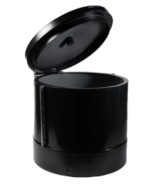
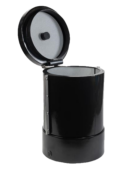
A few "tips" on how you can create "your own "best" habits" by using our products: Vacation homes and single-family homes: Sort organic waste into its own small container in the kitchen. Take organic waste to the composter on the farm every few days. Add the necessary mixture when refilling. Empty the composter during the growing season. Our thermally insulated compost models 180, 450 och 800 as well as the DryMix are suitable from our range. Also Twin 12 ja 45 composters can also be used when the waste quantities are small. Townhouses, apartment buildings: Sort organic waste in your own small container in the kitchen. Alternatively, sorted biowaste can be put in "intermediate composting" which is placed on abalcony or terrace closer to the place where the waste is generated and sorted. The interval between emptying the intermediate composter is from weeks to a few months.Twin 12 ja 45 composters and DryMix are suitable from our range. The biowaste container can alternatively be emptied directly into a larger composter. As composters on the property, 180, 450 or 800 composters or DEEP composter can be used.
The shortest and most efficient way to utilize nutrients and resources is at the
source of the waste. Transport and waste management fees at centralized
sorting facilities are expensive, and sorting and composting biowaste on site
reduces costs significantly and is at the same time environmentally friendly. It
significantly reduces the property's
carbon footprint.
These effects – cost savings and a smaller carbon footprint –
accumulate over the long life of our equipment (at least 50 years).
Composting involves the breakdown of biowaste into nutrients. Composting usually
takes place in nature, all organic waste is composted and the nutrients return to
nature's cycle – ("from the soil – back to the soil").
In the composter, the decomposition of biowaste is efficient, the compost
temperature remains high and harmful bacteria and weed seeds are destroyed.
The composter ensures the necessary conditions for composting, i.e. that
nutrients, air, moisture and heat are present in the right amount.
Composting does not cause odors or environmental damage.






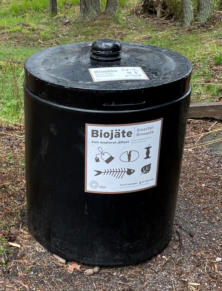
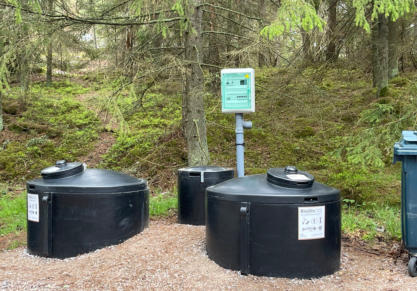
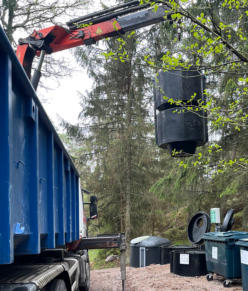
biowaste
Composting waste at source. Composting is a natural and efficient way to use biodegradable, organic waste. In mixed waste, bio-waste causes odour, run-off liquids, mess and increases the need to empty waste containers. According to the European Waste Strategy, the aim is to reduce waste incineration and move towards a "circular economy". Sorting/composting bio-waste on site improves the sorting and recycling of other waste types. This will easily achieve the EU recycling target. (The recycling rate for municipal waste is 55% by 2025. The target for 2030 is 60%. The target for 2035 is 65%).
The smartest waste solution.
Composting waste at source.

The most economical and environmentally friendly
- composting biowaste on site.
Reliable composting process
in our composters.
Guidelines for selection, equipment capacity
and suitability
For more information on sizing for your project, visit our online store:
https://domestic-shop.com/lang-EN/composters/rt-composters
You can contact our free advisory service at +358 400912111 or send
your questions by email to helpdesk@raita.com
We also offer design assistance for larger projects.
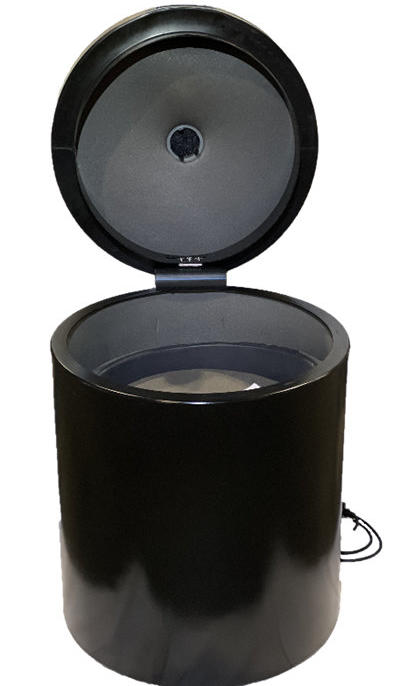
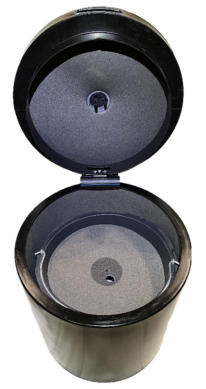
insulated / thermo
undergound / automated
double / twin / fluid system









- Kompostera bioavfall - återvinn näringsämnen
- Kompostera toalettavfall
- Kompostera avloppsslam
- Twin-12 komposterare
- Twin -45 komposterare
- RT180 termokomposterare
- RT450L termokomposterare
- RT800L termokomposterare
- DEEP djupkomposterare
- Tekniska sidor, manualer, ritningar
- Information in english
- Information på svenska